Item
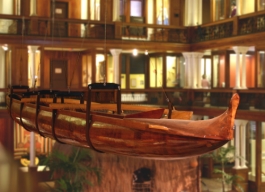
ʻA: The Racing Canoe of Prince Kūhiō
Hele ʻe ka waʻa
The speed of a canoe.
Said of a fast traveler*
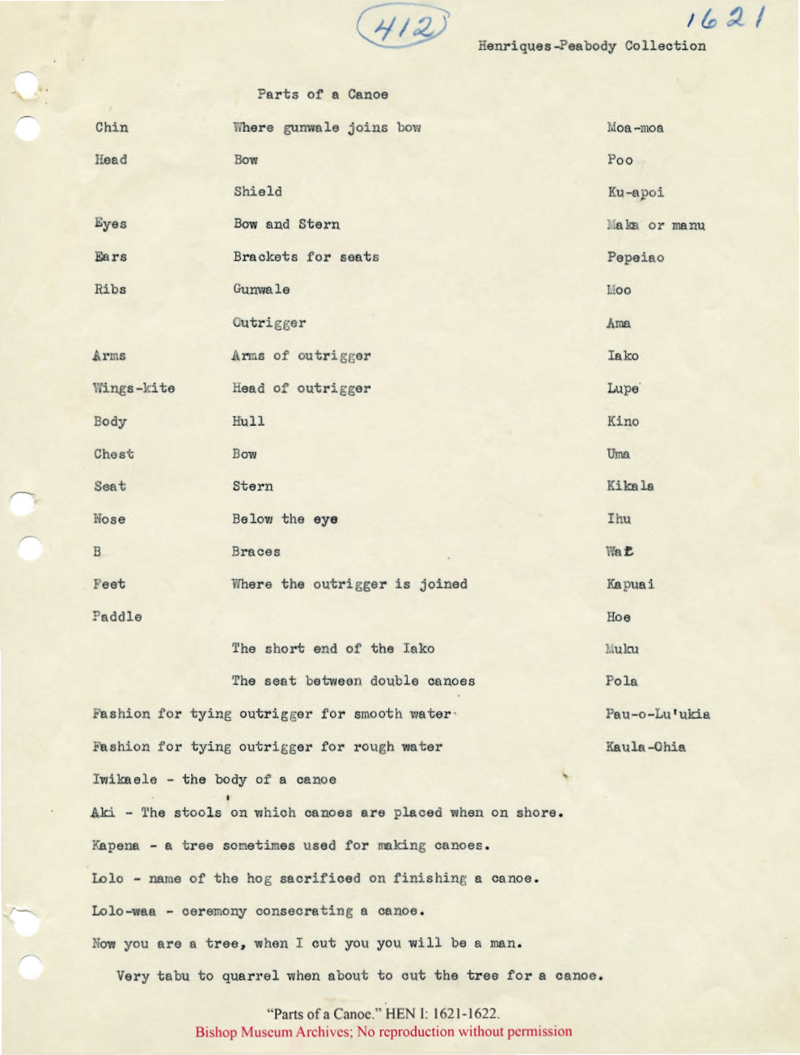
The early Oceanic peoples that settled the Pacific Islands were a canoe culture. They explored vast stretches of ocean more than a millennium prior to Columbus’ arrival. Recent discoveries by Bishop Museum Chairman of Anthropology Dr. Tianlong Jiao point towards great maritime cultures of the southeastern coast of China as possible forefathers of these Austronesian peoples. Arrival at a destination for these early explorers did not mean an end to the necessity or usefulness of the canoe. This tool remained a fundamental part of their lives as they fished, surfed, traversed their new environment and also often sailed return voyages to the lands from which they came.
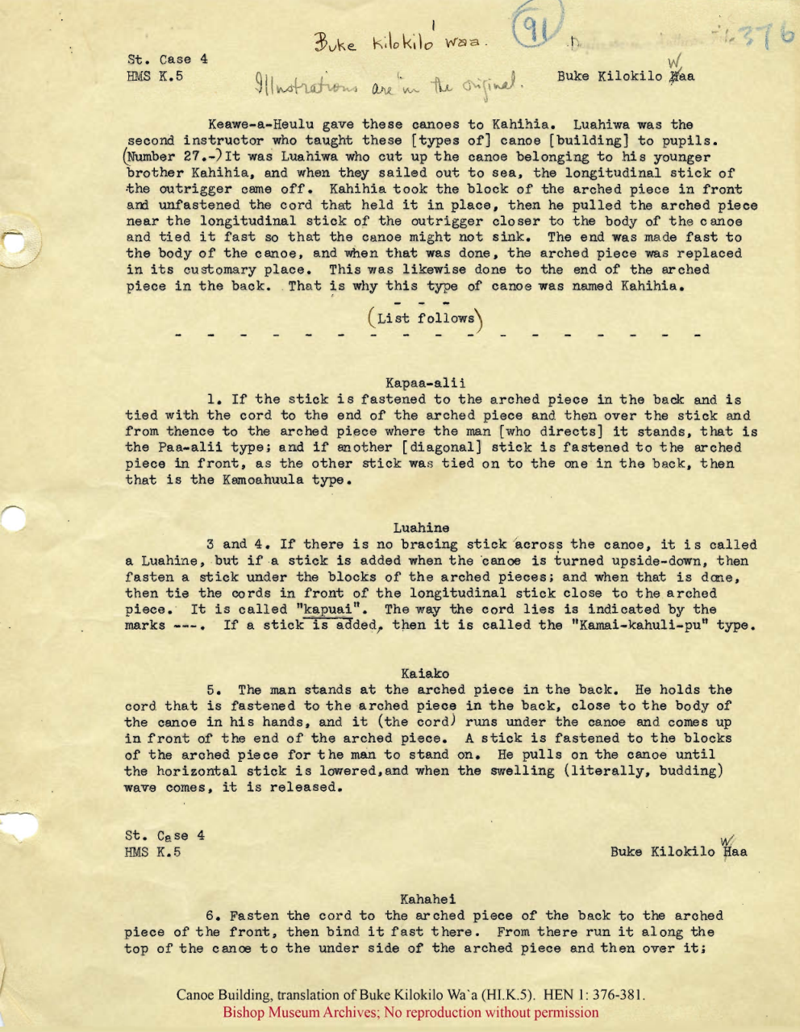
One of the most highly honored members of early Hawaiian society was the kālai waʻa (canoe carver). This kahuna held knowledge of the complex plans for building a canoe. With this information a people could be supplied with plentiful amounts of fish or be carried as a warring army to battle. Kamehameha I is said to have relied on nearly a hundred kahuna kālai waʻa in the building of his massive peleleu (double-hulled war canoe) fleet that assisted in his plan to unify the Hawaiian Islands. These kāhuna knew the forests well and used clues from nature in selecting the right tree for a canoe. One such sign was the ʻelepaio, a bird that would alight on all koa trees but peck only on those that were not sound. One traditional Hawaiian moʻolelo speaks of the canoe goddess Lea who at the death of her favored child buries him. From that spot rose the ʻelepaio that would assist all canoe builders to come.
There were many types of canoes in ancient Hawaiʻi from the single-hulled outrigger or waʻa kaukahi, to the large double-hulled canoe or waʻa kaulua. Originally these canoes, even the massive peleleu, were cut from single logs. An enormous loss of native koa forests has caused modern day large canoe projects to use other sources. In the early nineteen hundreds Prince Jonah Kūhiō Kalanianaʻole took part in efforts to recapture the importance of the canoe in Hawaiian society. The canoe ʻA, a waʻa kialoa or racing canoe, held at the Bishop Museum was owned and raced by the Prince and is believed to be the first canoe built in historic times for racing. Soon after, canoe clubs were created and helped to revive and promote the ancient sport. Hawaiʻi became the birthplace of a contemporary outrigger canoe-racing scene that now encompasses many nations and thousands of clubs. In Hawaiʻi each year, State championships are held with determined paddlers racing across Hawaiian waters aboard koa canoes. Long-distance inter-island races are also held which remind paddlers today of the skill and strength of the originators of what is now the official sport of Hawaiʻi.
* Pukui, Mary Kawena. ʻOlelo noʻeau: Hawaiian Proverbs & Poetical Sayings. Bernice P. Bishop Museum special publication 71. no.736, p81. Honolulu: Bishop Museum Press, 1983.
Location Bishop Museum
Collection Kapiʻolani-Kalanianaʻole Collection
Artifact Number C.04411