
Portrait
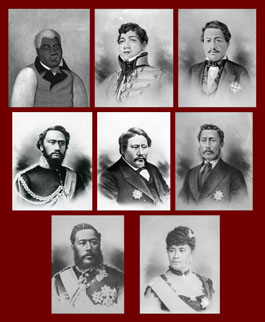
Nā Aliʻi Portraits
Eia ua lani a Hāloa i pili ai ka hanu i ke kapu.
Here is a chief descended from Hāloa, whose kapu makes one hold his breath in dread.
A compliment to a chief. To be able to trace descent from Hāloa, was to be of very high rank from remote antiquity.*
There were two traditional paths to power in ancient Hawaiʻi, the path of Kū and the path of Lono. Kū, as the god of war, could bring mana to a young warrior through victory in battle while Lono, the god of procreation, could raise up one’s moʻokūauhau or genealogy through the birth of a child from a well chosen, high ranking mate.
Kamehameha I was successful in both areas. He, as instructed by his kahuna, built the massive Puʻukohalā heiau in Kohala, Hawaiʻi to honor the god Kūkāʻilimoku. He carried Kū with him into battle and his victories along this path resulted in his rule of a united Hawaiʻi. His lineage however, meant that his descendants’ rule might be challenged. For an answer to this problem he turned to the path of Lono. By deftly taking on one of the highest ranking wahine in the islands, Keōpūolani, as the wahine who would bear his sacred children, he was able to produce the high lineage that would come to form a dynasty.
One traditional method used in asserting the right to rule was the linking of the newly born high- ranking chief to the ancient gods through the recitation of koʻihonua (genealogical chants). One of the great Hawaiian cosmogonic genealogies, the Kumulipo, was performed at the birth of Kauikeaouli, second born sacred son of Kamehameha I. This narration linked Kamehameha III to the great gods that were the progenitors of all Hawaiians.
Although genealogy continued as a major factor in determining the right to rule in Hawaiʻi, the introduction of foreign ideas of constitutional law and democracy meant that electioneering and politics would also come to be significant components.
After the sudden death in 1873 of King William Charles Lunalilo, who had left no appointed successor, an election was held in which David Laʻamea Kalākaua was chosen as Mōʻī. Kalākaua’s opponent in the election, Emma Naʻea Kaleleonālani Rooke, was considered by many Kānaka Maoli to have a more significant claim to the throne because of her genealogy. To Hawaiians, the Mōʻī was a direct link to the divinity of their ancestors, not a mere political position. Emma however, was seen as being pro-British while Kalākaua garnered important support from powerful local American business interests by retreating from earlier opposition to the U.S.-led reciprocity treaty.
This was however, to be the last election in the kingdom as in 1877 Kalākaua appointed his sister Lydia Kamakaʻeha Dominis heir to the throne. Her Majesty Liliʻuokalani became Queen at the death of her brother in 1891. The 1893 Coup d'État against Her Majesty Liliʻuokalani prevented the Queen’s heir apparent and niece, Victoria Kaʻiulani from ever assuming the throne.
*Pukui, Mary Kawena. ʻOlelo noʻeau: Hawaiian Proverbs & Poetical Sayings. Bernice P. Bishop Museum special publication 71. no.308, p38. Honolulu. Bishop Museum Press, 1983.
Location Bishop Museum Archives
Collection Art Collection
Audio
Mele ko`ihonua no Kamehamameha
Audio
Documents
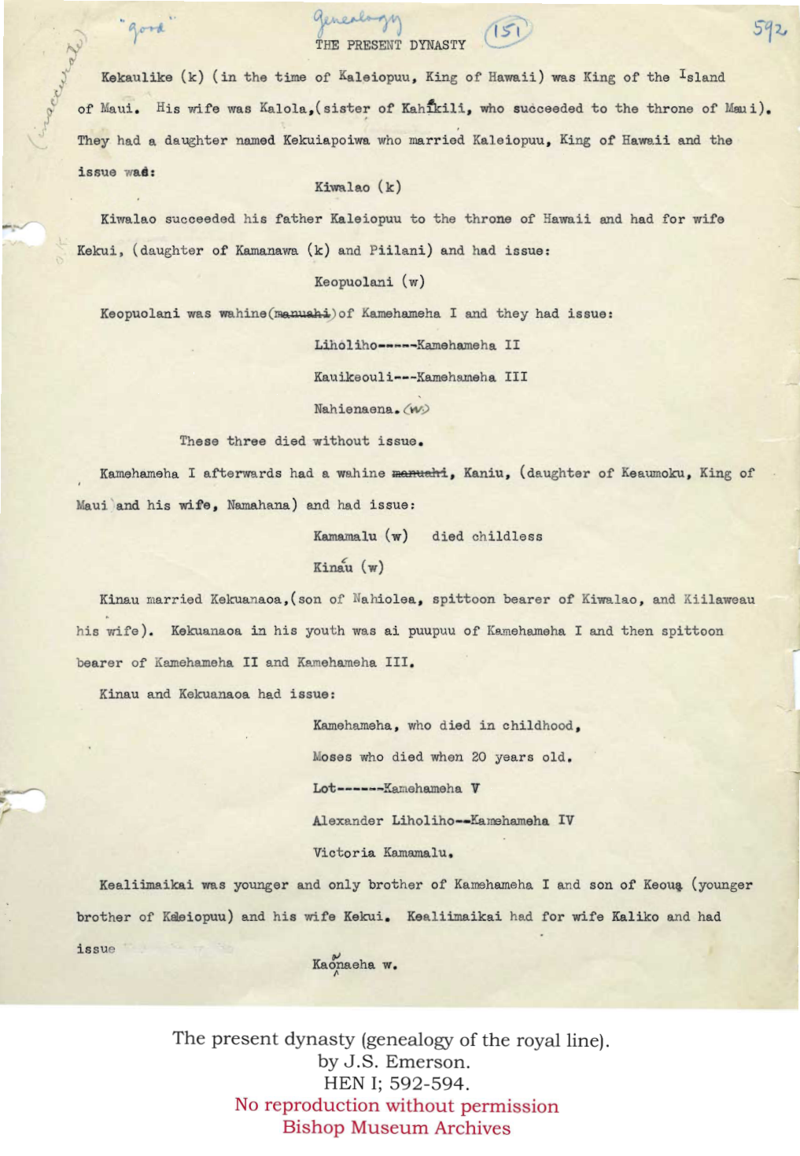 PDFThe Present Dynasty; Genealogy of the Royal LineOpen →
 PDFNā Ali`i Portrait AlbumOpen →
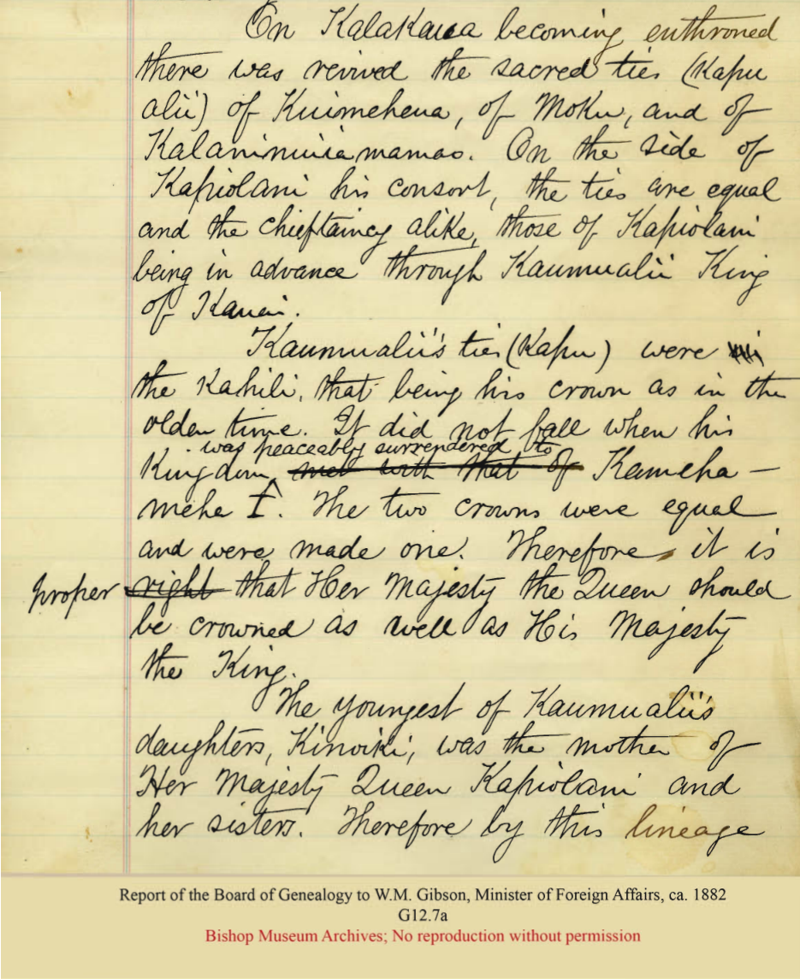 PDFReport of the Board of GenealogyOpen →
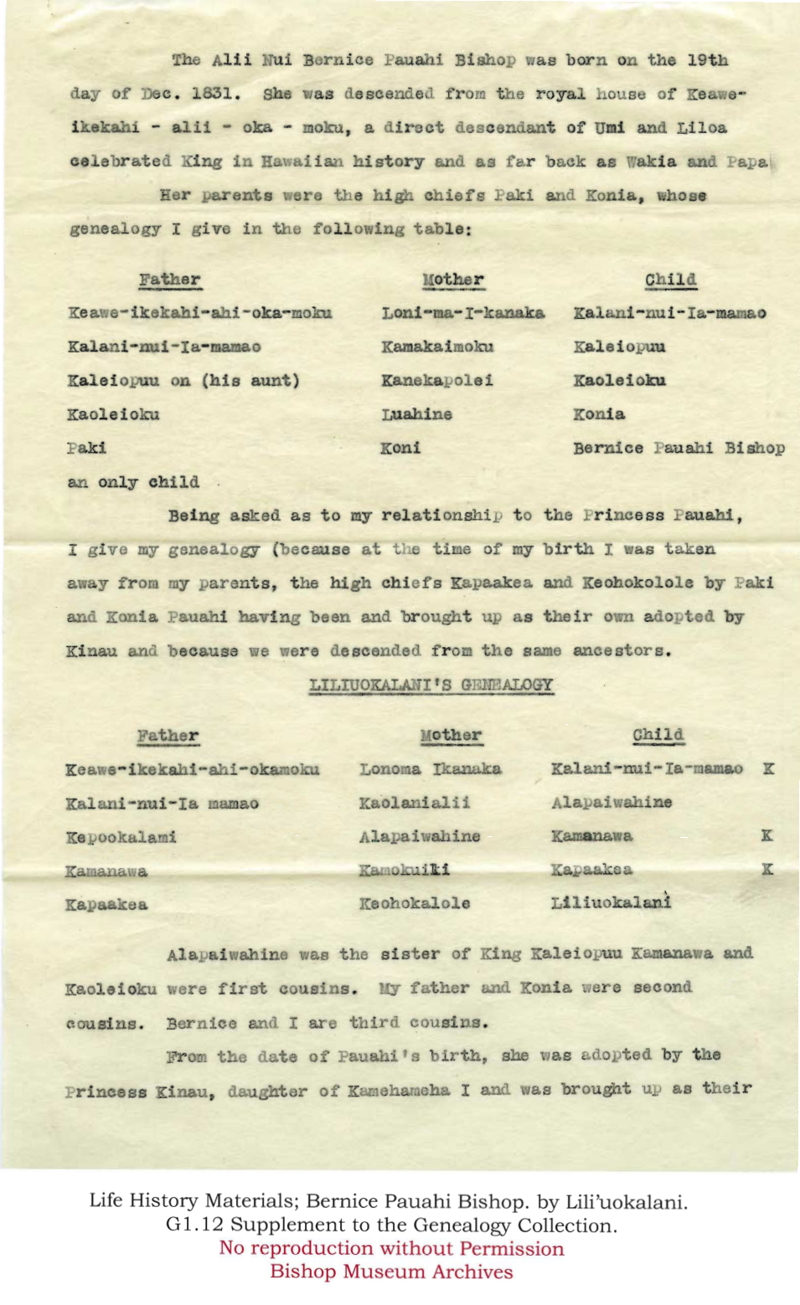 PDFLife History Materials; Bernice Pauahi BishopOpen →
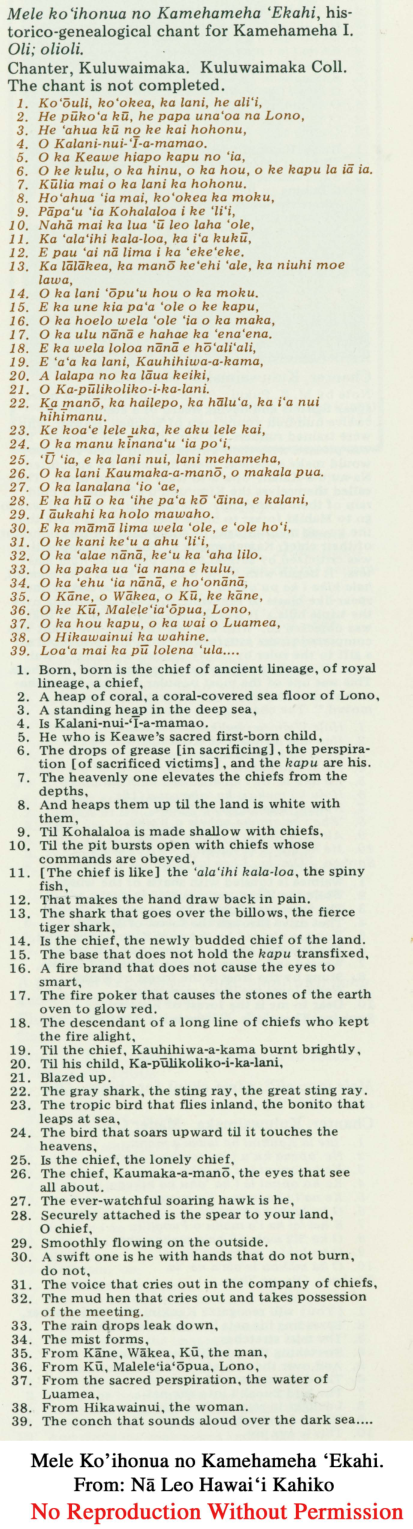 PDFMele ko`ihonua no KamehamamehaOpen →
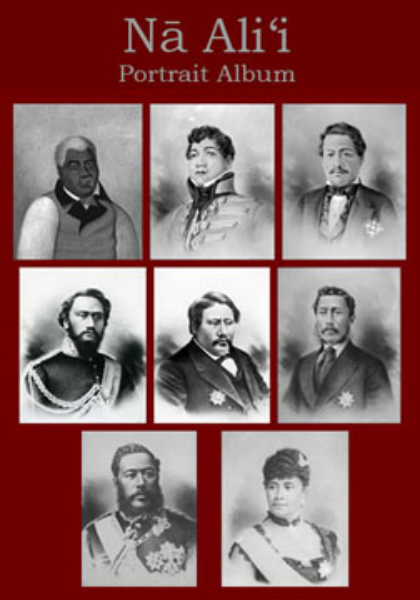 PDFNā Ali`i Portrait Album: MonarchsOpen →
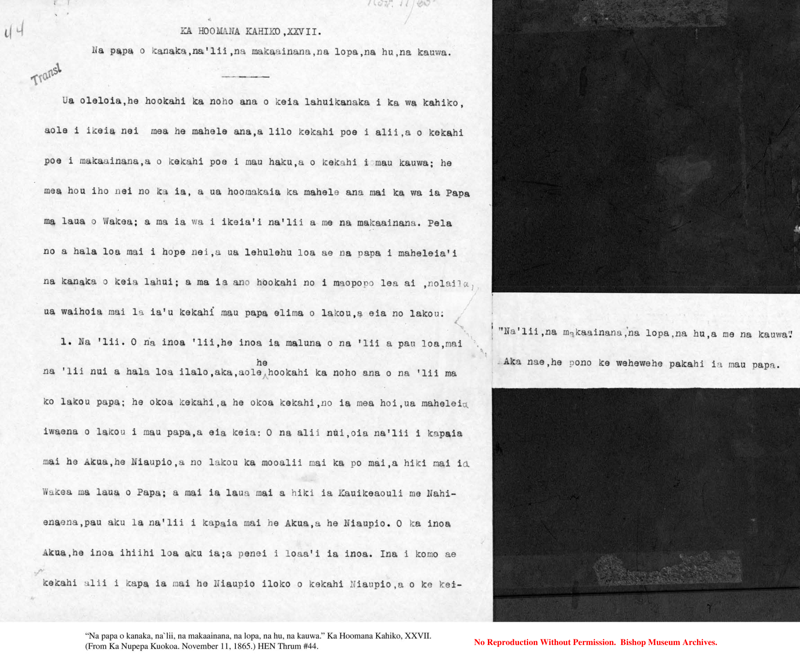 PDFClasses of PeopleOpen →
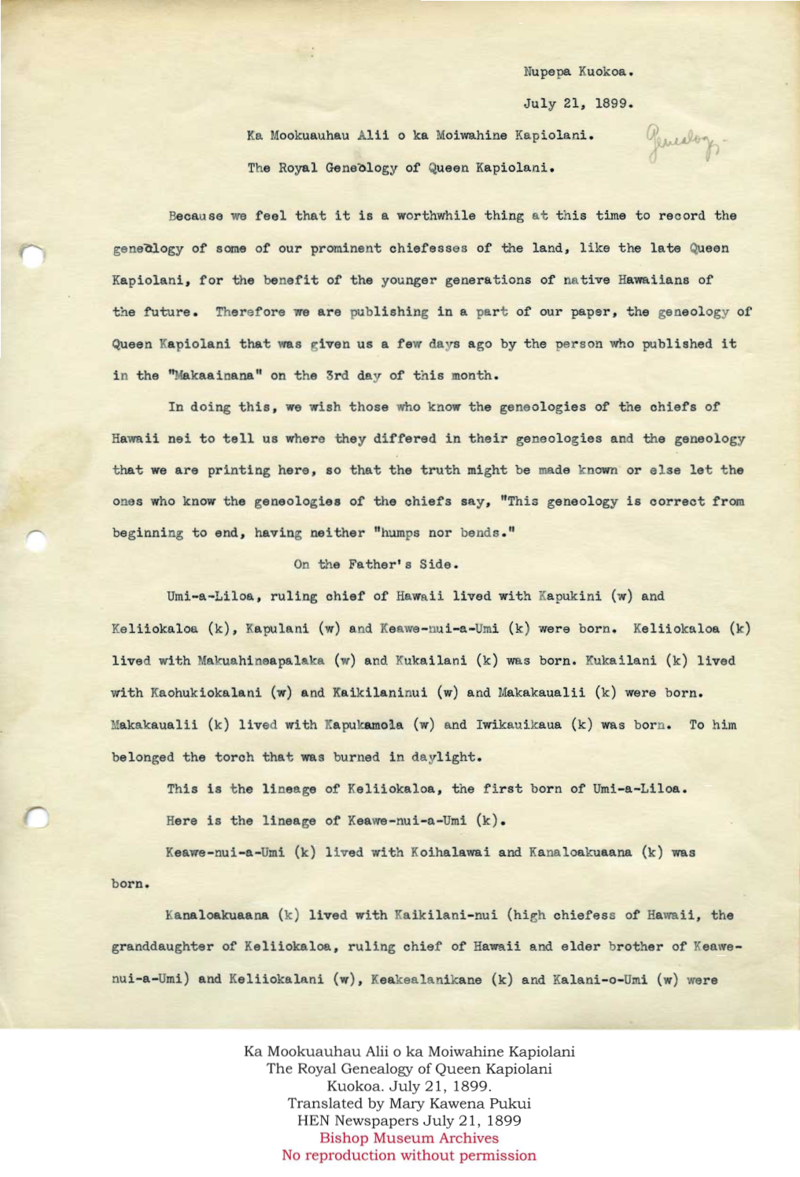 PDFKa Mookuauhau Alii o ka Moiwahine KapiolaniOpen →
Connected resources
10 linksPortrait
Nā Aliʻi Portrait Album
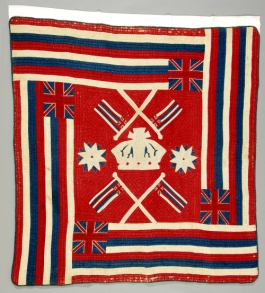
Item
Kapakuiki Hae Hawaiʻi
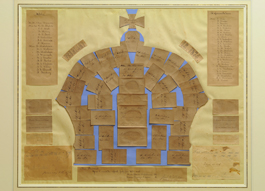
Document
Ballots from the Royal Election of 1874
Portrait
Nā Aliʻi Portrait Album: Monarchs
Resource
Classes of People
Mele & Oli
Mele ko`ihonua no Kamehamameha
Resource
Life History Materials; Bernice Pauahi Bishop
Resource
The Present Dynasty; Genealogy of the Royal Line
Resource
Ka Mookuauhau Alii o ka Moiwahine Kapiolani
Resource