Item
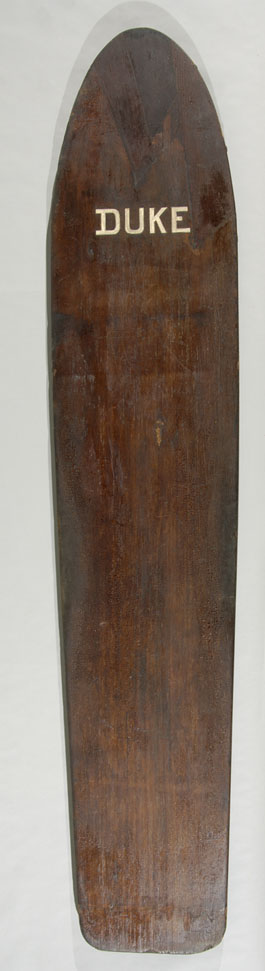
Duke Kahanamoku's Surfboard
He Kāʻeʻaʻeʻa pulu ʻole no ka heʻe nalu
An expert on the surfboard who does not get wet
Praise for an outstanding surfer*
Although tremendous forces of change heavily impacted traditional Hawaiian culture, many of the things that are iconic symbols of Hawaiʻi today, are based in pre-contact Hawaiian life. Heʻenalu ʻana or surfing, is one example of a traditional Hawaiian pursuit that not only survived but revived and grew to become a worldwide passion. Although surfing has changed, adapted and sometimes been commercialized, riders today still sit atop their boards, floating on a beautiful sea, waiting for the perfect wave in many of the same surf breaks as Kalākaua, Nāhiʻenaʻena, Hiʻiaka and Pele have done before them.
Native Hawaiian's great familiarity with the ocean created a natural arena for the development and mastery of such a sport. The first foreign arrivals from the frigid waters of England and the Northwestern United States thought of the ocean as a dangerous and uninviting place. Seeing Kānaka Maoli joyfully swimming and gracefully riding the waves atop wooden planks made quite an impression. Early descriptions tell of twenty or more riders at time being propelled with “a most astonishing velocity” and mention, “these men may be said to be almost amphibious. The women could swim off to the ship and continue half a day in the water…”
Many ancient moʻolelo are filled with tales of the surfing exploits of the gods. From the moʻo goddess Kalanimainuʻu, disguised as a beautiful wahine out on the surf luring the unsuspecting aliʻi nui Punaʻaikoaʻe to his capture, to Hiʻiaka enjoying a surf session with her beloved Hōpoe, stories of surfing remind us of its integral part in the Hawaiian art of leʻaleʻa (pleasure).
The arrival of Calvinist missionaries and new understandings of propriety in dress and behavior, along with a capitalist call to work more and play less, meant a decline for the ancient sport. Rev. Hiram Bingham explained the loss by writing “the decline and discontinuation of the use of the surfboard, as civilization advances, may be accounted for by the increase in modesty, industry and religion…”
In spite of this decline, surfing did continue and many aliʻi from Kauikeaouli to Kalākaua had favorite surf spots where they could, like many of us today, escape the pressures of the world around us.
The tourism boom of the early twentieth century set the stage for a revival of the popularity of surfing. Expert Hawaiian watermen, including Duke Kahanamoku, working on the beaches fronting the Royal Hawaiian and Moana hotels of Waikīkī found a receptive audience for this thrilling ancient sport in the large number of visitors that were coming to Hawaiʻi.
In the 1950's surfing would grow in popularity as photos of locals aboard the gigantic waves of Waimea, Sunset and other breaks would spawn a migration of California surfers attracted by the famous big waves of the North-shore of Oʻahu.
Through the ‘60's surfing became a professional sport and continued to grow. Today, millions of people the world over experience the art of Heʻe nalu ʻana.
* Pukui, Mary Kawena. `Olelo no`eau: Hawaiian proverbs & poetical sayings. Bernice P. Bishop Museum special publication 71. no.649,p.73. Honolulu. Bishop Museum Press, 1983.
Location: Bishop Museum