Item
Lei Niho Palaoa
Ke koaʻe lele kaha i ka pali o Līloa
The tropic bird that soars to the cliff of Līloa
Said of a chief of high rank*
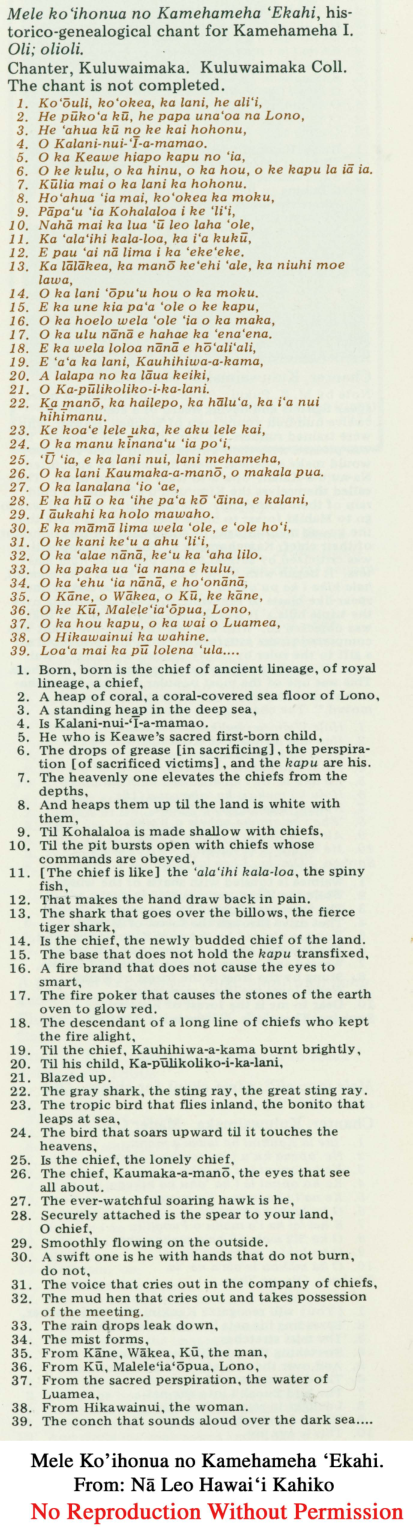
Hawaiian society under the ʻAikapu system was stratified according to rank. An individual’s rank was not determined by wealth or gender, but by genealogy. Those of the highest rank could trace their genealogy all the way back to the beginning of time, to the very first organism to inhabit the earth, even to the primordial darkness preceding all life. These genealogies were recorded in chants called koʻihonua that glorified Aliʻi bloodlines, ancestors, and their decedents.
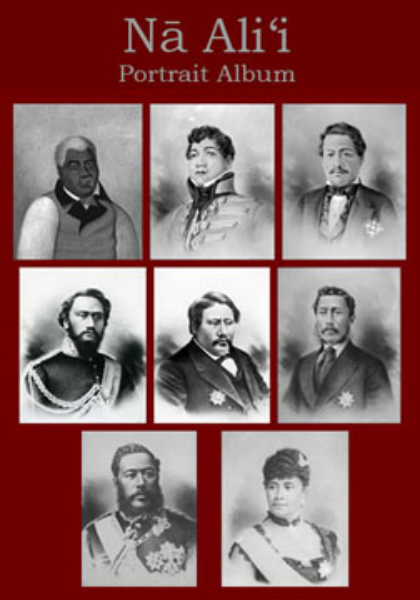
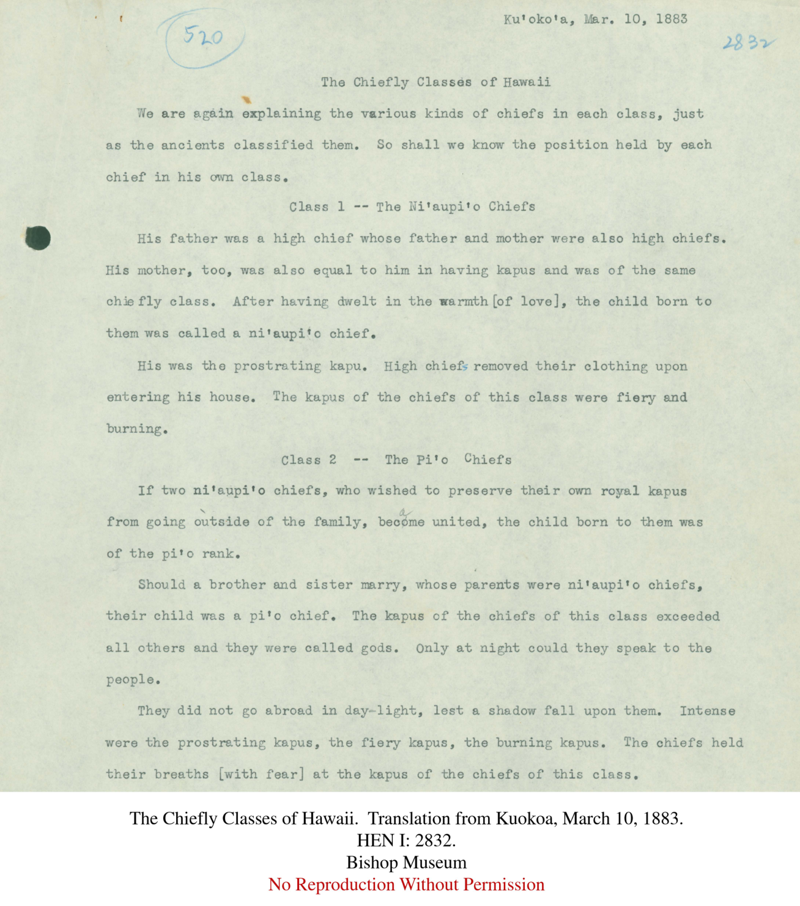
Aliʻi, like other strata of Hawaiian society, were not all of similar rank. The highest Aliʻi were the Mōʻī, or supreme rulers. They were often nīʻaupiʻo chiefs, having being conceived through the union of high ranking siblings. These nīʻaupiʻo chiefs were considered to be Akua (Gods) on earth, and as such, they had to keep strict kapu, or taboos, least the welfare of their people and lands be compromised. Also, because ruling was a kuleana (responsibility, right), many chiefs would go to great lengths to ensure their kapu were kept. For example, for those whose kapu forbade their shadow falling on another human, they would often leave their kauhale (housing complex) only after the sun had gone down so that their shadow could not be cast. Ruling in Hawaiʻi was not just about luxury, as the Mōʻī had an inter-dependent relationship with the makaʻāinana. The commoners provided the resources that the Mōʻī would use to mālama their people and the Gods.
There might be one Aliʻi Nui ruling over an entire island, or several each with their own moku (large land division within an island). Lesser Aliʻi, known as kaukau aliʻi might rule over an ahupuaʻa, smaller land division, or an ʻili, an even smaller land division within an ahupuaʻa. Unlike the Aliʻi Nui, the Kaukau Aliʻi often did not have strict kapu. In fact, many Kaukau Aliʻi were not of much higher rank than the konohiki, or resource managers, who dealt directly with the makaʻāinana (common people).
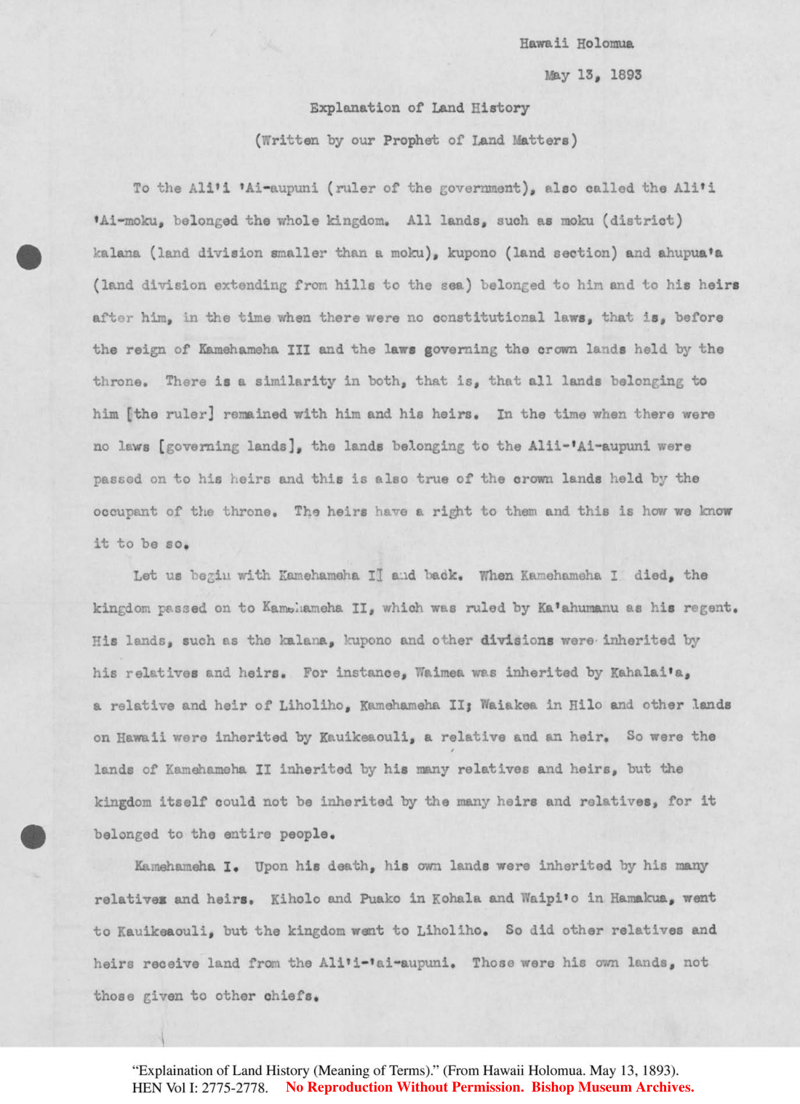
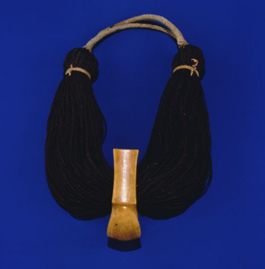
One important symbol of rank for the highest Aliʻi was the lei niho palaoa, a whale tooth pendant. The carved hook pendant is strung on thousands of finely braided strands of human hair. These significant lei were worn by Aliʻi of both genders. These whale teeth were collected from carcass that would wash ashore at specific places in the islands. Theses wahi pana (sacred places) were considered important areas to control in order to have access to the mana that these items brought. Control over these spots, like Kualoa on Oʻahu, might mean control over the entire island.
* Pukui, Mary Kawena. `Olelo no`eau: Hawaiian Proverbs & Poetical Sayings. Bernice P. Bishop Museum special publication 71. no.1750, p188. Honolulu. Bishop Museum Press, 1983.
Location: Bishop Museum
Audio
Mele ko`ihonua no Kamehamameha
Audio