Item
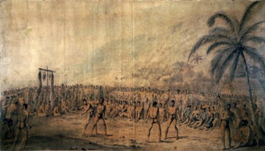
Boxing Match Before Cook
by John Webber (1752-1793)
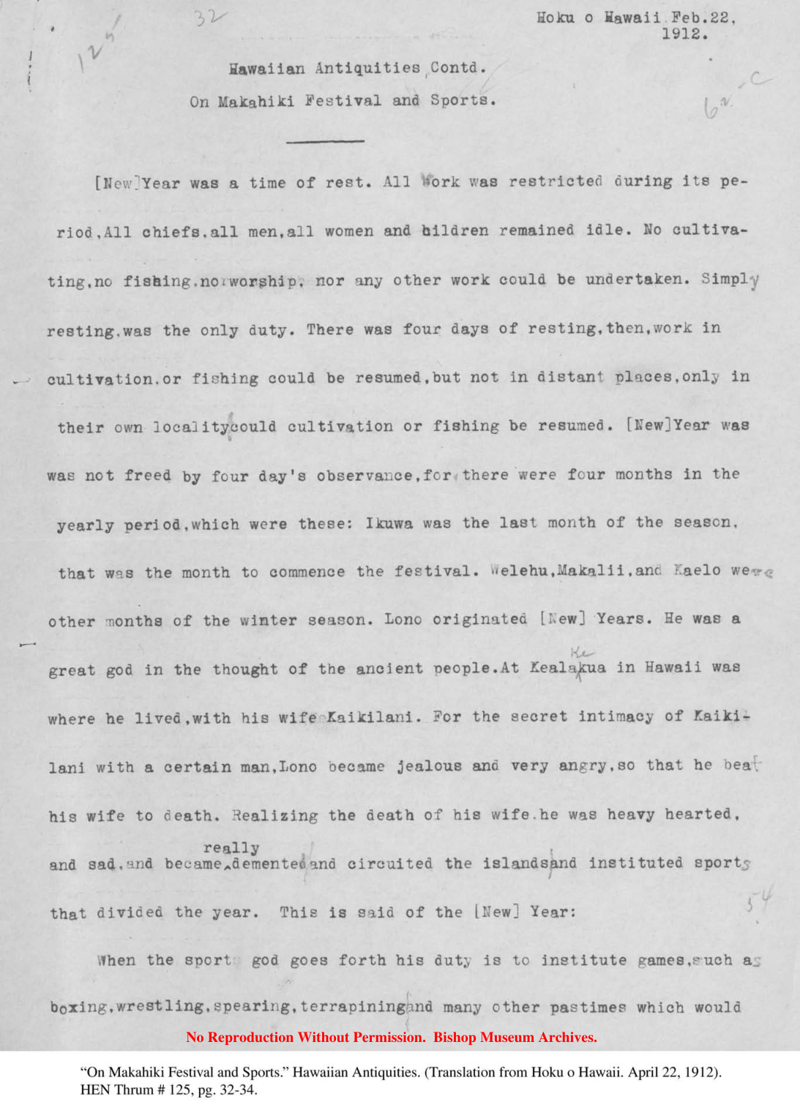
Games and sport have always been an integral part of Hawaiian life. In traditional society paʻani kahiko (ancient games) were numerous and extremely popular. These games actually came to the forefront of everyday life during the yearly makahiki festival that spanned approximately three to four months. The time of makahiki meant the arrival of the god Lono and the setting aside of the god Kū. Warfare and other activities of Kū ceased and the land, and its inhabitants, were allowed to regenerate, procreate and grow anew. This was a time of leʻaleʻa (pleasure) when many games and contests were held.
Physical Sport
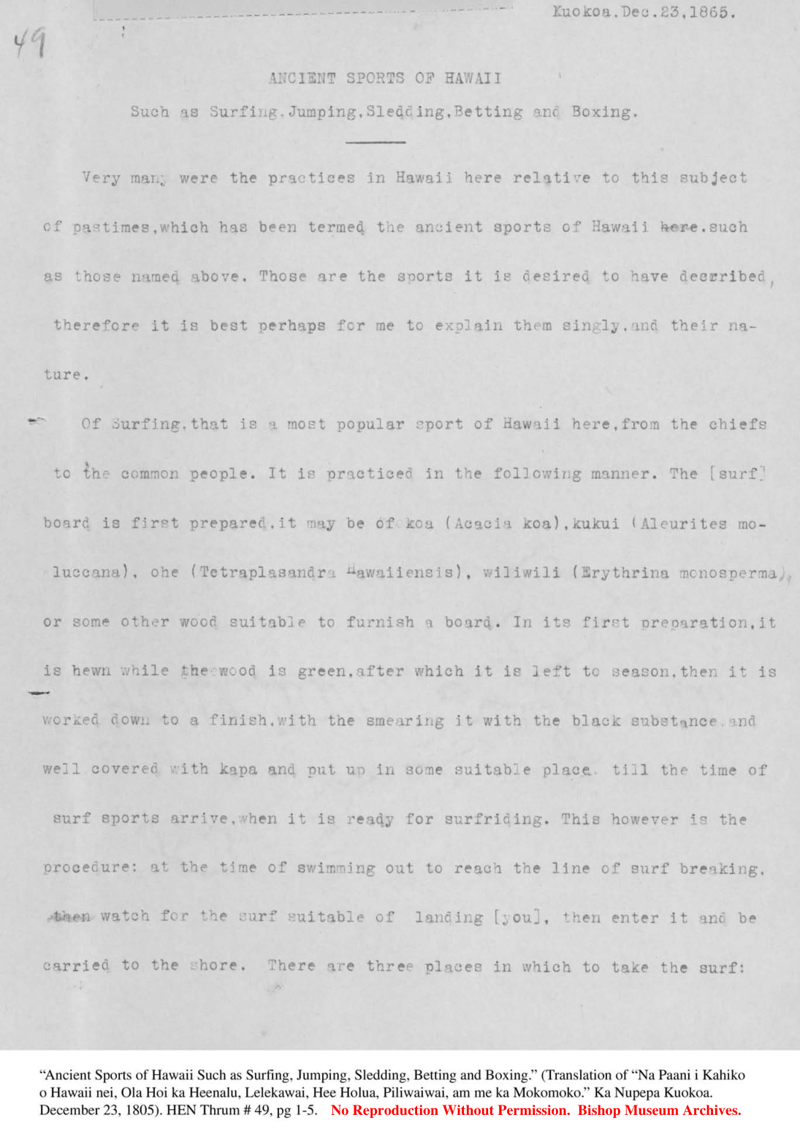
Some of these games that were played were physical sports. These contests were not only used as arenas where the strong and swift could attain recognition and fame, but they also served to train the many warriors who might need to be called upon later in battle. Ancient moʻolelo record many contests of sport ranging from kūkini (running), heʻe hōlua (sledding), heʻe nalu (surfing), lele kawa (cliff jumping) to hākōkō (wrestling), mokomoko (boxing) and many others. Games such as ʻulumaika (rolling disks), moa paheʻe (dart throwing) and ʻōʻō ihe (spear throwing) required a steady hand and a trained eye. The more formal of these contests during the makahiki would take place at a designated kahua paʻani (sporting area) with the wooden staff Lonomakua watching over the contestants. Not only was a contestant being judged, but the glory or dishonor of the family name was on the line. The victors of these contests were heralded throughout the islands. Many of the most heroic stories of the gods involve these battles of strength and speed.
Games of the Mind
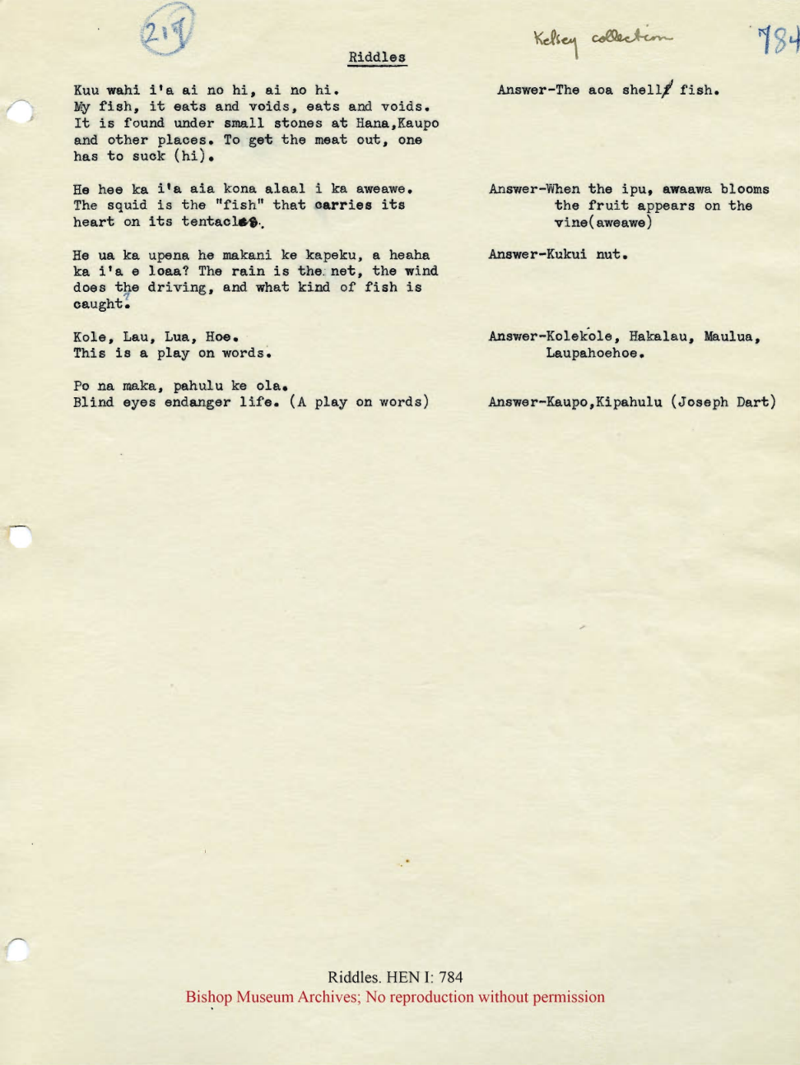
Kānaka Maoli were also passionate about games of the mind that rewarded the player with the quickest and sharpest wit. Recitation of genealogies, proverbial sayings and knowledge of hidden meanings in phrases were some of the most admired of Hawaiian skills. Word games and ʻōlelo nane (riddles) were favorites. Another verbal type of duel hoʻopaʻapaʻa, could be seen as an extreme verbal sport as a loss in a contest could mean death. Kōnane, a form of checkers, was another game that challenged the mind. This was often played on boards of stone with alternate sets of black and white pebbles. Some more elaborate sets contained carved figures as men.
Procreative Games
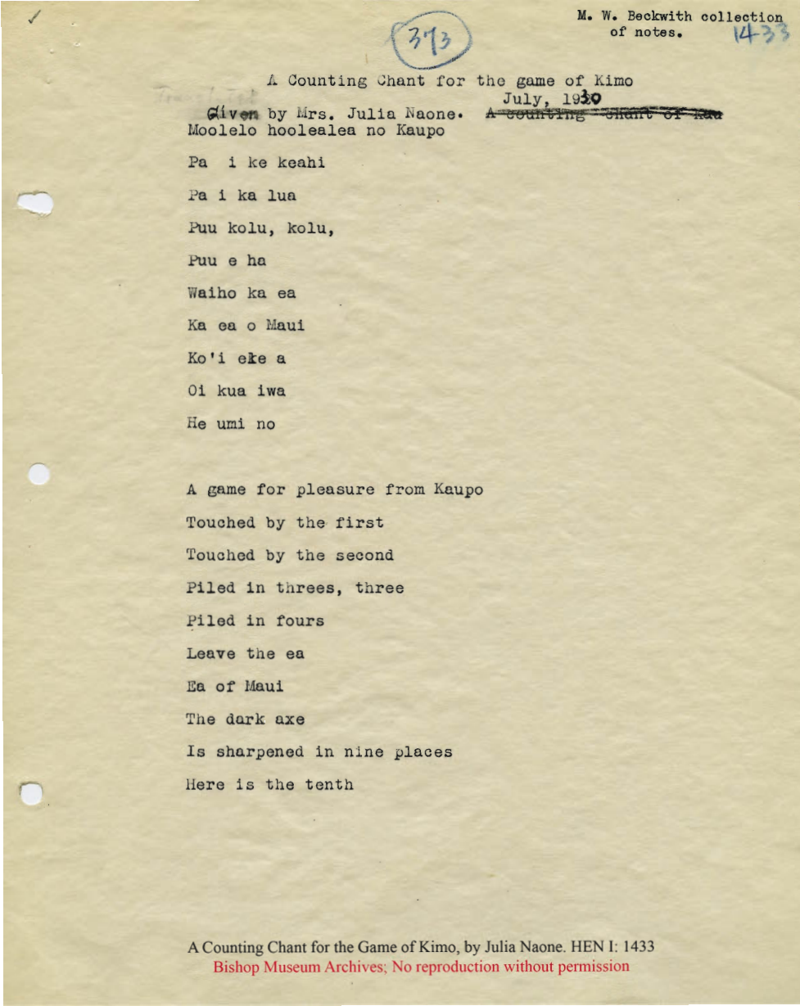
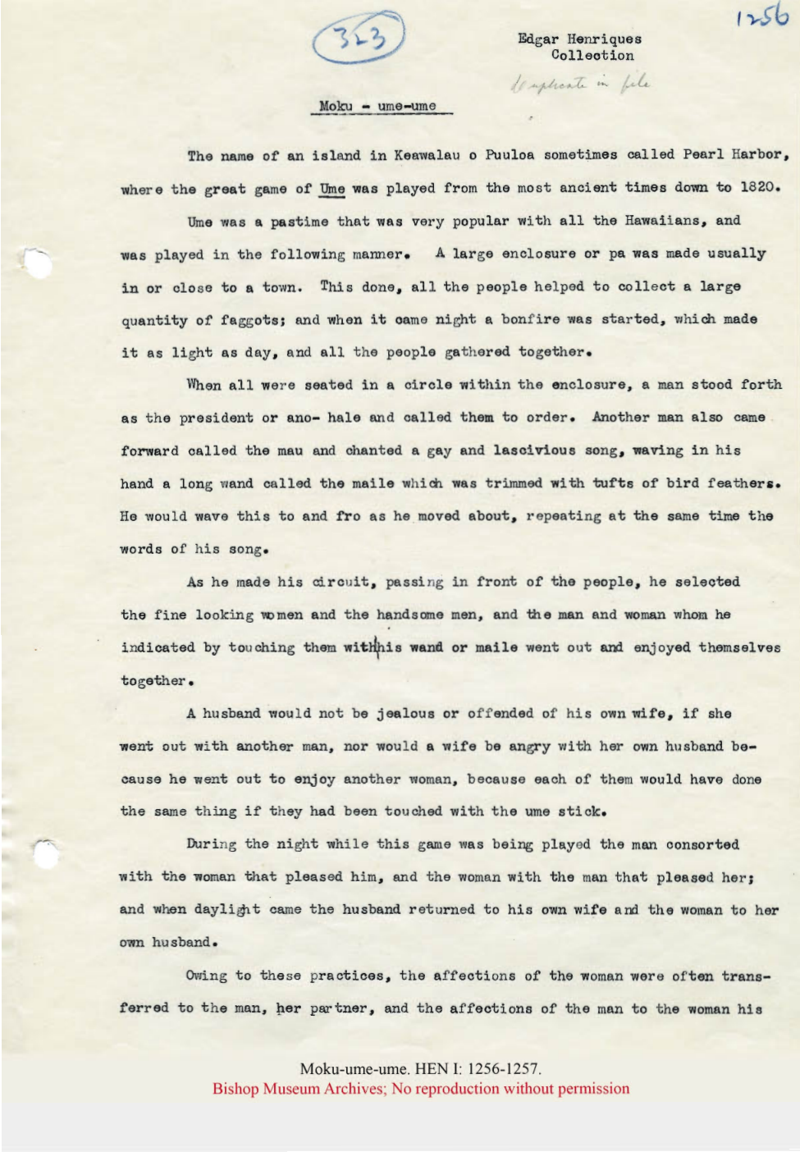
Procreation was the basis for the earth itself and was considered a natural gift of the gods. Games to encourage procreation were especially prevalent during the makahiki. ʻUme (to draw towards or attract) and kilu were two varieties of this sort of game. Like the other games and sports mentioned, accounts of ʻume and kilu can be found throughout the ancient moʻolelo. One well-known incident is the game of kilu played by Hiʻiaka, sister of Pele, and Lohiʻau, an aliʻi of Kauaʻi.
Boxing match before Captain Cook. Ink and watercolor by John Webber, ca. 1779 [the actual event took place on January 28, 1779]. (56x98.5 cm)
Location Bishop Museum Archives
Collection Art Collection
Call Number Webber